Organizers
This workshop is facilitated by organisers with multiple years of researching (un)ethical design and deceptive practices in a range of contexts, including design, computer science, education, and policy, resulting in impactful publications in their respective fields. Also, we have collectively organised a series of successful workshops, symposia, or SIGs on DPs, EduCHI, and in the context of conversational user interfaces. The organising team includes both researchers and industry professionals at early to senior career stages.
Contact organizers: For general questions regarding the workshop, reach out to the communication chairs; for questions regarding submissions, reach out to the publication chairs.
Facilitators
Thomas Eßmeyer is a Postdoc researcher at the University of Bremen and coordinates a research cluster at the Leibniz ScienceCampus Digital Public Health. His work includes collaborative work on an ontology for DPs, investigations of problematic interactions on social media platforms, and effects of the temporal aspects of DPs. Thomas will serve as the Lead Facilitator of the workshop.
Links: Personal Page, Google Scholar

Johanna Gunawan is an Assistant Professor of Computer Science and Law at Maastricht University, where she conducts research at the intersection of HCI, cybersecurity, and law. Her DPs scholarship contributes contextualised understandings of DPs in situ and across multiple modalities of use, as well as conceptual framings bridging computer science and legal disciplines and investigations into the potential for consumer recourse. She will serve as an on-site Co-Facilitator for the workshop.
Links: Personal Page, Google Scholar

Colin M. Gray is an Associate Professor at Indiana University, where they serve as program director for a graduate program in HCI/d. Their research has contributed foundational knowledge on DPs, including a unified ontology; connections between design, law, and HCI; and articulation of challenges in supporting ethical design practices. They will serve as an on-site Co-Facilitator for the workshop.
Links: Personal Page, Google Scholar

Web Chairs
Katie Seaborn is an incoming Associate Professor at the University of Cambridge and current National University Associate Professor at Institute of Science Tokyo. They have carried out fundamental work in Japan, finding new patterns in Japanese apps and, in collaboration with Japanese public broadcaster NHK, conducting the first user study on these patterns. In 2024, they were awarded a prestigious JST PRESTO grant to exclusively research deceptive design. Katie will serve as a Web Chair.
Links: Lab Page, Google Scholar

Hauke Sandhaus is a PhD candidate at Cornell Tech researching how external influences shape ethical technology design. His work examines tensions between commercial incentives and responsible design practices, including barriers to safety-critical data sharing in autonomous vehicles, GenAI’s influence on technology design education, and privacy implications of large-scale datasets. He introduced “bright patterns” as autonomy-supporting alternatives to DPs and developed frameworks for quantifying ethical UX. Hauke will serve as a Web Chair.
Links: Personal Page, Google Scholar

Publications Chairs
Contact: Reach out to the publication chairs at publications@chi2026.darkpatternsresearchandimpact.com
Lorena Sánchez is a Postdoctoral Researcher at the University of Twente. Her work includes the understanding of designer’s tensions to avoid the implementation of manipulative designs. Her research focuses on the intersection of manipulative designs and users vulnerability, aiming to create multidisciplinary solutions to tackle vulnerability towards manipulative designs. She will serve as a Publications Chair.
Links: Personal Page, Google Scholar

Alberto Monge Roffarello is an Assistant Professor at Politecnico di Torino, Italy, where he conducts research in the digital wellbeing domain. His work has advanced understanding of attention-capture design patterns, strategies for digital self-control, and frameworks to guide ethical and wellbeing-oriented design. He will serve as the a Publications Chair for the workshop.
Links: Personal Page, Google Scholar

Engagement Chairs
Kai Lukoff is an Assistant Professor of Computer Science and Engineering at Santa Clara University. His research explores what makes technology use meaningful for users, identifies and evaluates design mechanisms that support user agency, and investigates digital self-control tools in the context of digital wellbeing. Kai will serve as an Engagement Chair for the workshop.
Links: Personal Page, Google Scholar

Gian-Luca Savino is a Senior Researcher and Speaker at the Gottlieb Duttweiler Institute, where he analyzes global technology trends and their effects on business, the economy, and society. Previously, he was a postdoctoral researcher in HCI at the University of St. Gallen, focusing on mobile user behavior and DPs research across social networking platforms and health applications. He will serve as an Engagement Chair.
Links: Personal Page, Google Scholar

Communication Chairs
Contact: Reach out to the communications chairs at communications@chi2026.darkpatternsresearchandimpact.com
Sai Shruthi Chivukula is an Assistant Professor at Pratt Insitute, New York. Her research work investigates how designers and HCI practitioners navigate ethical decision-making in real-world, ecologically mediated contexts, using critical qualitative and design research methods. She translates these insights into practical and open-access ethics-focused methods and pedagogical tools that support ethical awareness, reflection, and action in design education and practice. Shruthi will serve as a Communication Chair.
Links: Personal Page, Google Scholar
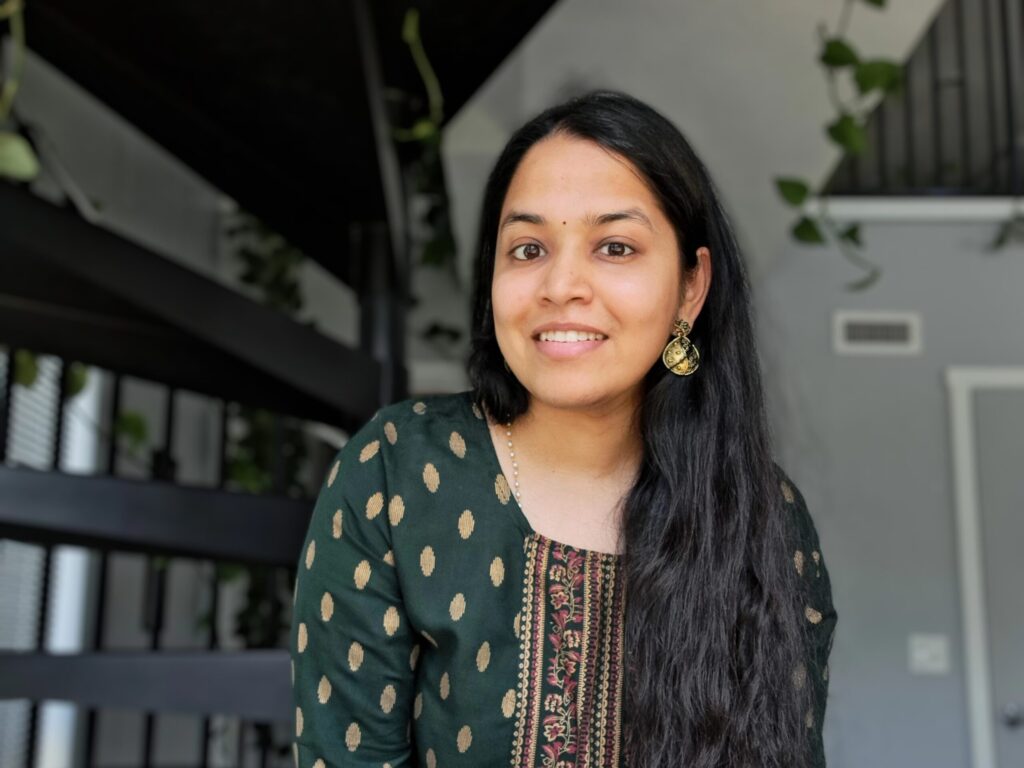
Satoshi Nakamura is a Professor at Meiji University in Japan. He is interested in how user selection in choice-based interfaces can be influenced, potentially as DPs. His research focuses on how interface elements, such as pop-out effects, font styles, position, device type, and progress bars, can affect user selections. He will serve as the Communication Chair for the workshop.
Links: Lab Page, Research Publications

Acknowledgments
This workshop is partially supported by the Leibniz ScienceCampus Bremen Digital Public Health, which is jointly funded by the Leibniz Association (W72/2022), the Federal State of Bremen, and the Leibniz Institute for Prevention Research and Epidemiology – BIPS.